Message from the Director
Dear Friends,
So much about the world of the internet has changed since Open AI released its first ChatGPT model in late 2022. In the months since, the Omeka Team and our users have grappled with a host of new challenges.
Traffic to cultural heritage sites is up exponentially as bots incessantly crawl the web ingesting content to feed the large language models. This bot traffic has caused administrators of cultural heritage sites to wonder exactly how they can maintain a commitment to open access given the human and technical resources that are required to withstand the load. The Omeka Team has encountered this challenge with the infrastructure that underlies Omeka.net and in caring for our many hosted installations. There are no easy answers here, but we’ve been working hard to mitigate that load and will continue to.
Perhaps more critical than the slow-downs caused by bot traffic is the fact that AI will surely lead to more vulnerabilities being discovered across the whole landscape of software. Last week’s PHP vulnerability (which made it possible for an attacker to run code on a server without logging in) is just one recent example. In that instance, the Omeka Team acted quickly to respond to the issue by securing our servers from the vulnerability and applying the necessary patches. Furthermore, the team has been actively scanning and patching our code base to keep ahead of any possible exploits on our servers or in Omeka Classic, Omeka S, or any addons that we produce.
Of course as models change there will be new challenges, and new positive improvements. For instance, the Omeka Team is working to offer an automated transcription service. We’re also working on new modes of access that might work with artificial intelligence to provide users with a more customized experience. Have no fear, however, any feature from the Omeka Team that leverages AI will be completely optional, and will be designed to solve real problems users are having.
As always, we look forward to working with the community as we chart a path forward.
Best wishes,
Sharon
New Developments
The Geolocation plugin has undergone extensive updates. Now, users can add multiple locations per item and incorporate polygon, polyline and rectangle shapes alongside points. Every map has a “Fit all” button that users can press to zoom the map out (or in) far enough to contain all available markers. For the basemap, the default is OpenStreetMap now, with API key settings for Carto and Stadia. Busy sites are encouraged to choose a provider that requires its own credentials rather than rely on the shared OpenStreetMap tiles.
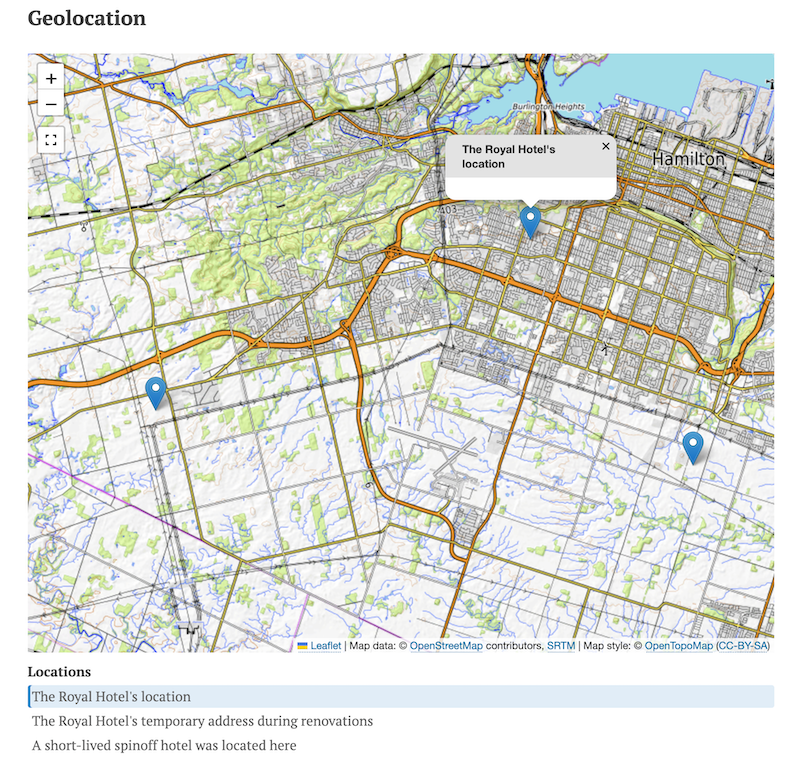
If you add a Browse Map page to your site, there is now a checkbox to Show item list on browse map. This offers an accessible readout of item titles that are represented on the map as features (pins and shapes). This list will show a number of items according to the “Number of locations per page” setting above, keeping in mind that items can have many locations each.
Additionally, the Geolocation block in Exhibit Builder now has one layout option: sequence mode, which adds the ability for users to browse through the map features in order. This order is determined by the order of the items you add to this block as well as the order of the map features on items with multiple locations.
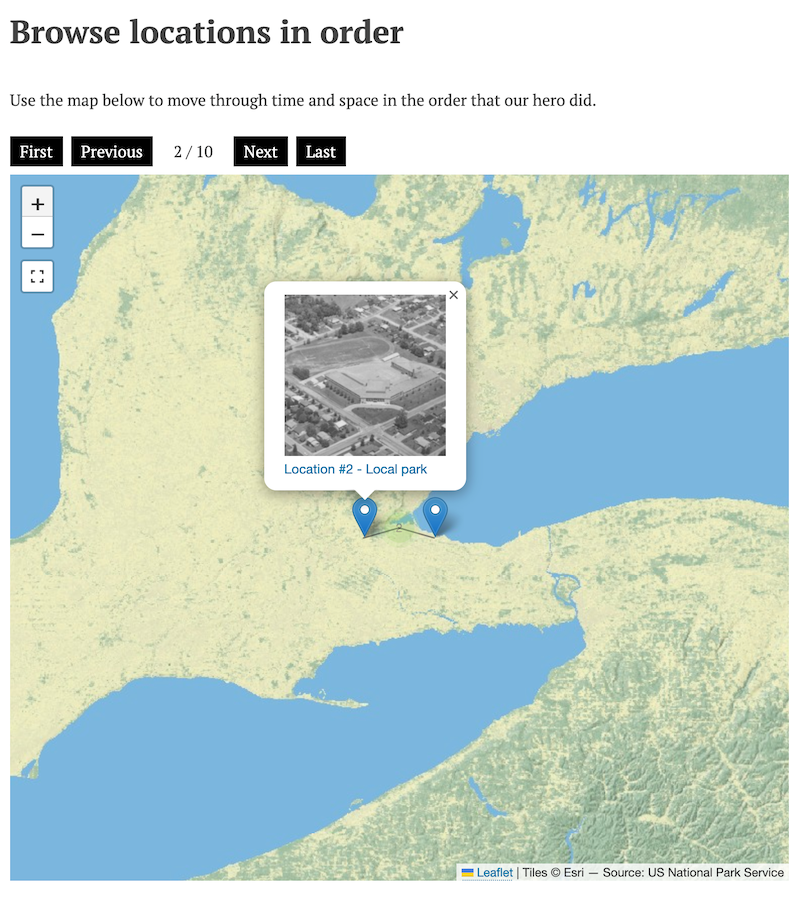
If this option is checked, the first item will be centered and its pop-up displayed when the page loads. First, Last, Previous, and Next buttons at the top of the page can be used to navigate through the sequence. An indicator in the middle of the buttons shows the total number of map features (not items), and where the user currently is in the sequence.
However, the addition of the sequence block is not the only exciting feature coming to Exhibit Builder. More additions to layout options in the Exhibit Builder plugin are coming very soon!
Spotlight: DC/Adapters
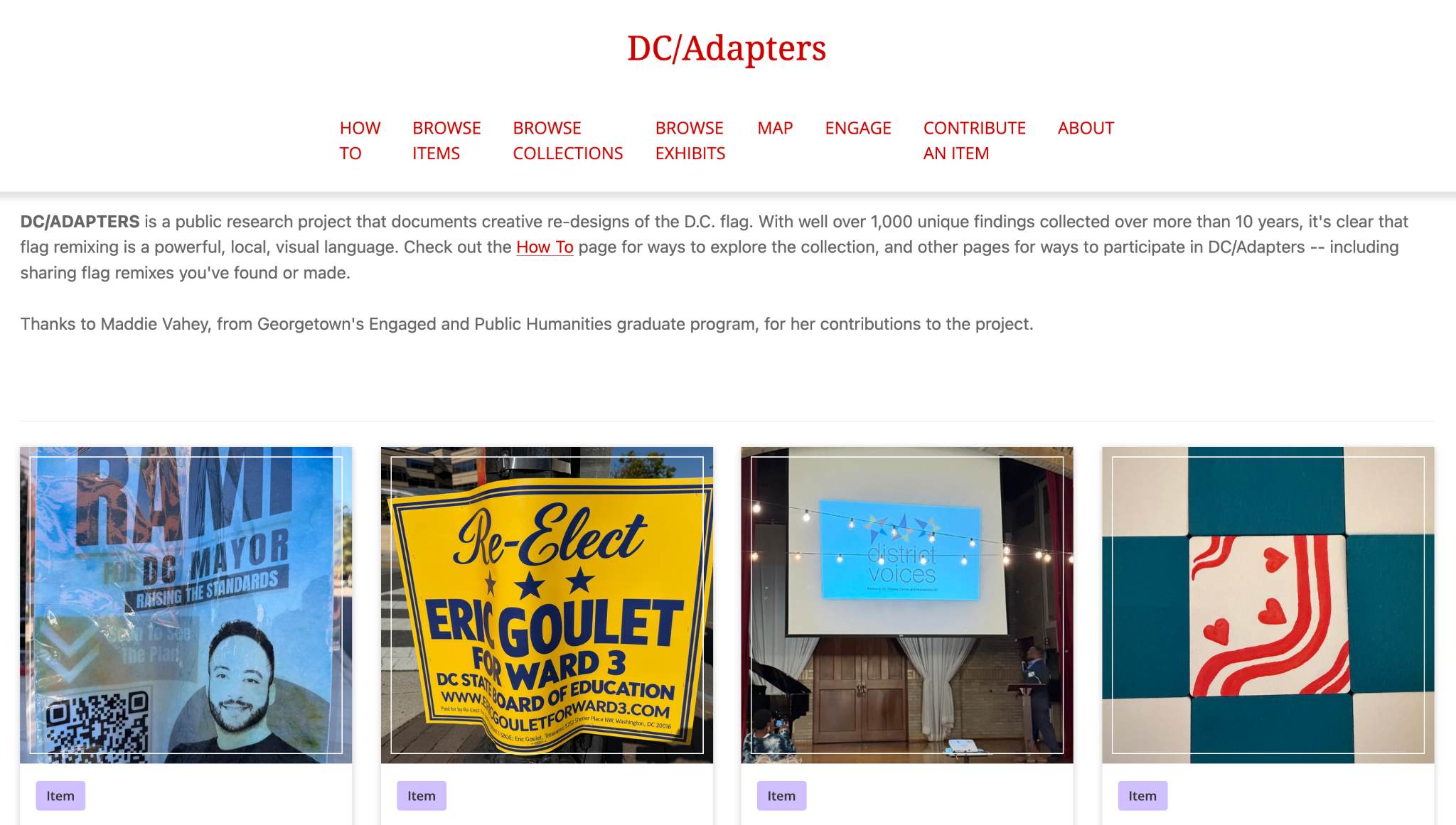
This quarter’s Omeka newsletter Spotlight is the DC/Adapters project. This Omeka.net project documents creative re-designs of the D.C. flag. The collection contains over 1,400 items, houses seven collections, and features six exhibits. The site makes use of the Geolocation and Contribution plugins to help document over 10 years worth of flag remixes. The project is run by Matthew Pavesich, Director of the University Writing Program at Johns Hopkins University. Explore the collections and learn more about the project today. Explore the Site
Share your work with us for inclusion in our directories, and for a possible future Spotlight!
Meet the Team
Name: John Flatness
Role: Lead Developer
How long have you been with Omeka?
I first worked on the Omeka team in the summer of 2009.
What work have you done that our community would be familiar with?
The first work I did for Omeka actually came before that, writing the OAI-PMH Repository plugin for Omeka Classic as a project for a class at Virginia Tech in the spring of 2009. Since then I’ve had my hand in a thing or two…2009.
Do you have a favorite project you’ve worked on or just a favorite part of working with the Omeka team/community?
I’ve always enjoyed helping individual people work through their specific problems, taking something from broken to working, or good to better. Talking with people on the forums can give a glimpse into what people are working on, lead to bug fixes or new features for everyone, or just provide a solution to one person’s problem, and those are all good results.
What’s a fun fact about you?
I’m also a lawyer (technically). Wait, you wanted a fun fact?
Omeka in the World
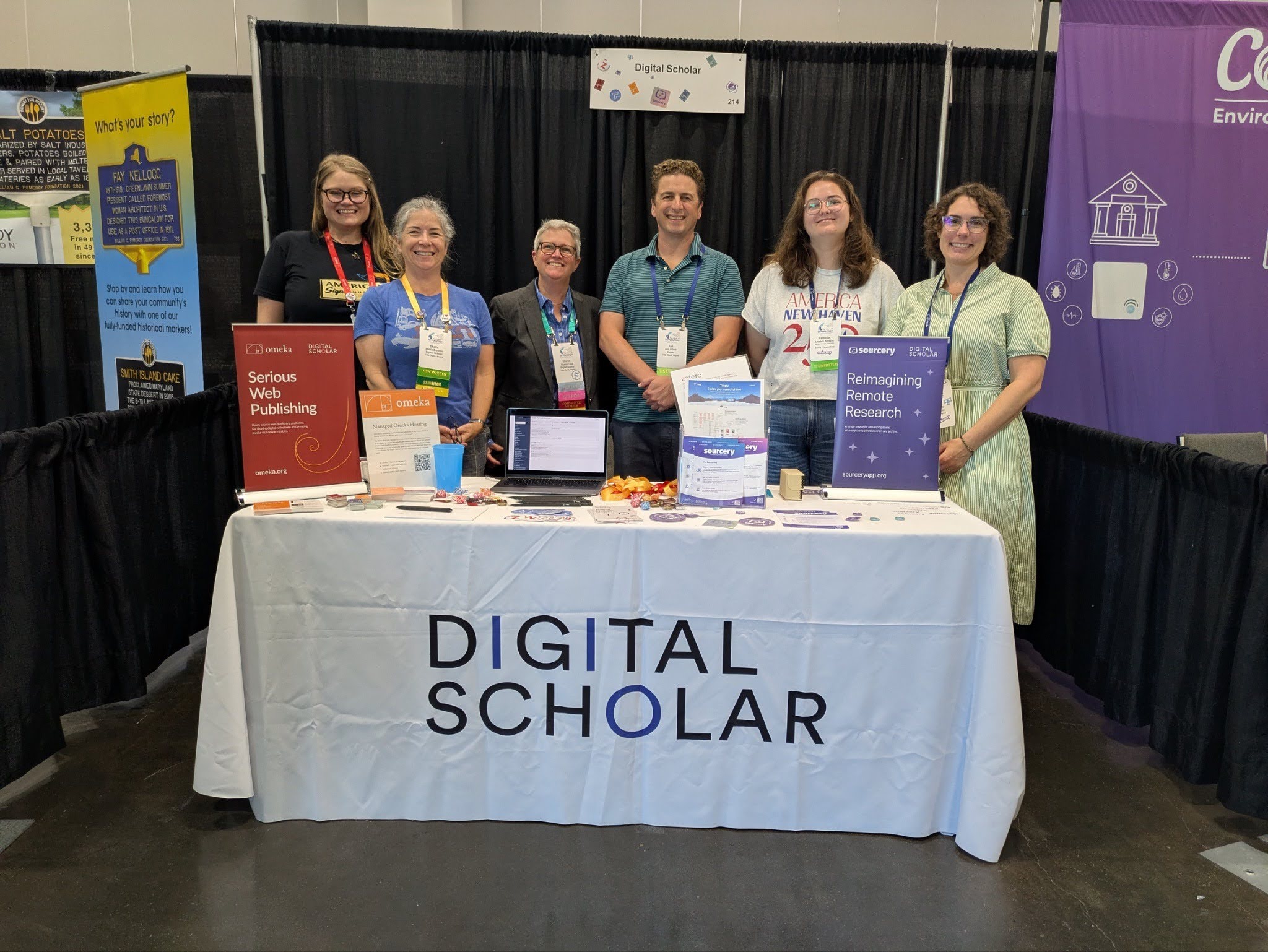
It’s been a busy few months of travel at Omeka! In the previous newsletter, we mentioned that several members of the Digital Scholar Team were on their way to NCPH. Sharon Leon, Ken Albers, and Dani Willcutt were delighted to have the opportunity to talk with you about the new and exciting initiatives regarding managed S hosting, upcoming training opportunities, and accessibility initiatives.
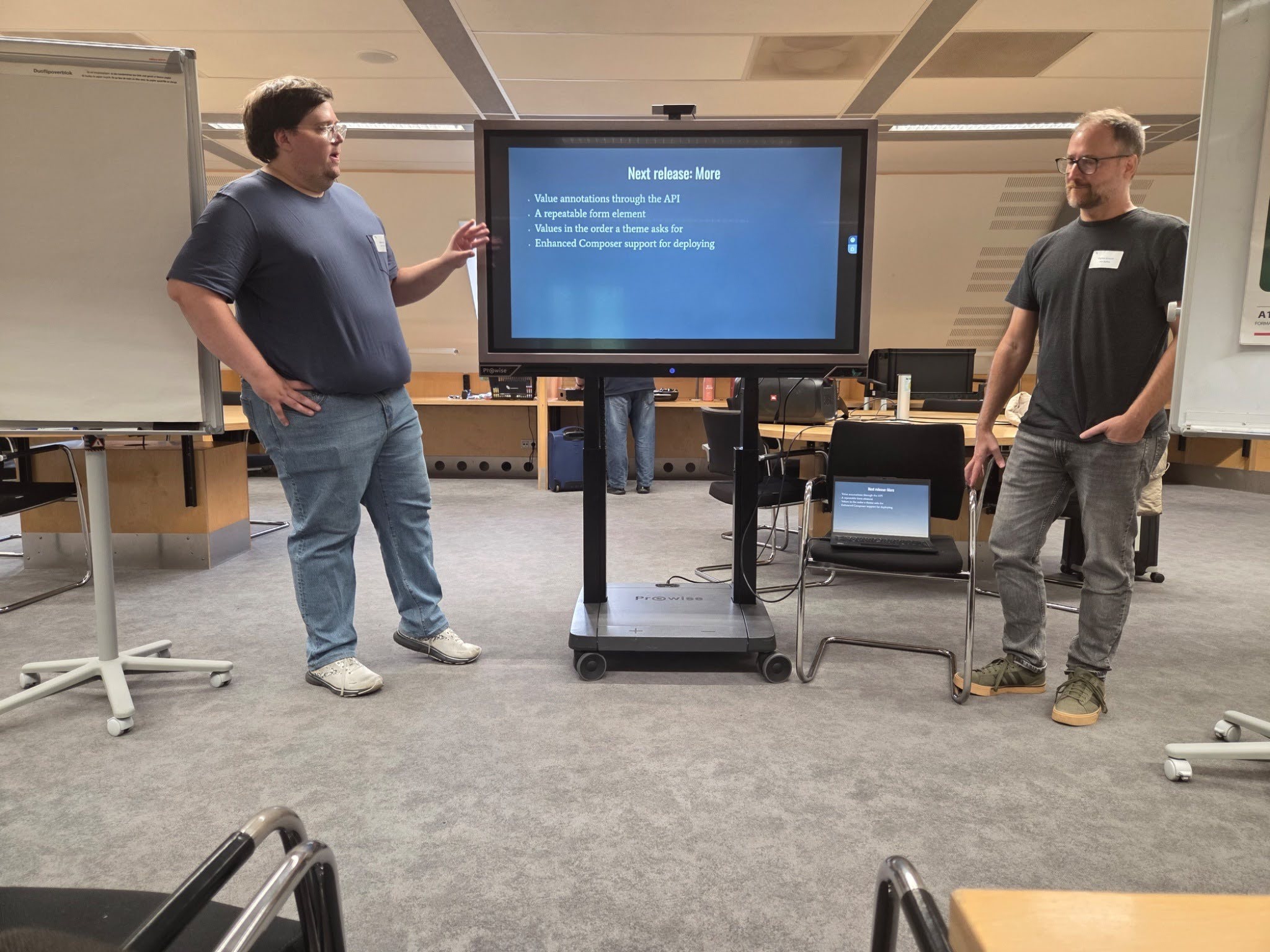
Meanwhile, John Flatness and Jim Safley were in attendance at the International Omeka S Developer and Power User event at Maastricht University. They were able to talk to our community of European Omeka users about upcoming developments they are working on and engage with other developers embarking on their own Omeka-related initiatives.
This month, the Omeka Team attended the second annual Digital Scholar All Hands Meeting, which took place in Washington D.C. and Vienna. It allowed us to brainstorm and collaborate with the Zotero, Tropy, and Sourcery teams about future developments and engagement opportunities for our community.
Upcoming Events
Community Call: Management
Join us for our next Community Call on Thursday, November 12th at 11:00am EST. We’ll discuss a variety of topics around the theme of “Management,” including site installation, admin management, and maintenance logistics. We’re doing things a little differently this time–we’re going to focus less on presentations and instead invite you all to share your experiences.
Come prepared to share a project you would like to showcase! You do not have to have a project related to the topic to participate in the project showcase.
The Omeka Community Call is a quarterly series of conversations, so we hope to speak with you again in February. If there are any topics you would like to discuss at future calls, let us know in this survey.
New Workshop Offerings
Our Intensive Courses instructor, Dani Willcutt, is offering a new series of workshops on a variety of topics related to Omeka Classic and S! Keep an eye on the Omeka Training page and our social media for registration information and workshop descriptions. All workshops are run from 12 pm to 1:30 pm EST/EDT.
Omeka Classic & Omeka.net in the Classroom
- Tuesday, November 10, 2026
- Thursday, February 4, 2027
Omeka S Essentials
- Thursday, November 5, 2026
- Tuesday, December 1, 2026
- Wednesday, January 27, 2027
Publishing Your Research with Omeka
- Thursday, February 18, 2027
Publishing Linked Open Data (LOD) with Omeka S
- Tuesday, April 13, 2027