Message from the Director
Happy New Year, Omekans!
Since its inception, one of our key goals for Omeka has been for it to facilitate the digital publishing goals of as many people, organizations, and projects as possible. That goal of democratic access has driven our approach to open source development, internationalization, and user-driven localization. Significantly, it has also driven our approach to creating accessible interfaces. The team has been on a multi-year journey to update and document the accessibility of the platforms. You can see evidence of that always-ongoing work by reviewing the accessibility statements and current VPATs for Omeka.net, Omeka Classic, and Omeka S.
We know that making open source software opens up a world of possibilities for users to roll their own installations of Omeka, but we also realize that the ease of a reasonably priced software-as-a-service, like Omeka.net for Omeka Classic users, is essential to lowering barriers to entry for those with less technical experience. Over 2026 we will be working hard to offer that “sign-up and go” experience to those who want to work with Omeka S.
Finally, we recognize that having access to training and professional development can really make it possible for users to get new projects off the ground. Keep your eyes open for a host of new 1 and 2 session offerings that might be just what you need to move forward with your work!
I hope you’ll join us for all the new developments to come in 2026.
With my best wishes for strength and perseverance,
Sharon
New Developments
In December, the Omeka Team hosted its first community call on the theme of design, with a particular focus on accessibility. In addition to hearing from many of our community members about their own projects, Omeka UI/UX developer Nelson Amaya presented on page templates and Omeka Lead UI/UX Developer Kim Nguyen presented on making accessible patterns in Omeka. This included an overview of the accessibility audits happening across Omeka platforms, along with the additional training the Team is undergoing to enhance their design skills for better compatibility with assistive technology. Additionally, discussion covered how individuals can take steps to make their sites more accessible through customizing color contrast, text size, and adding alt text.
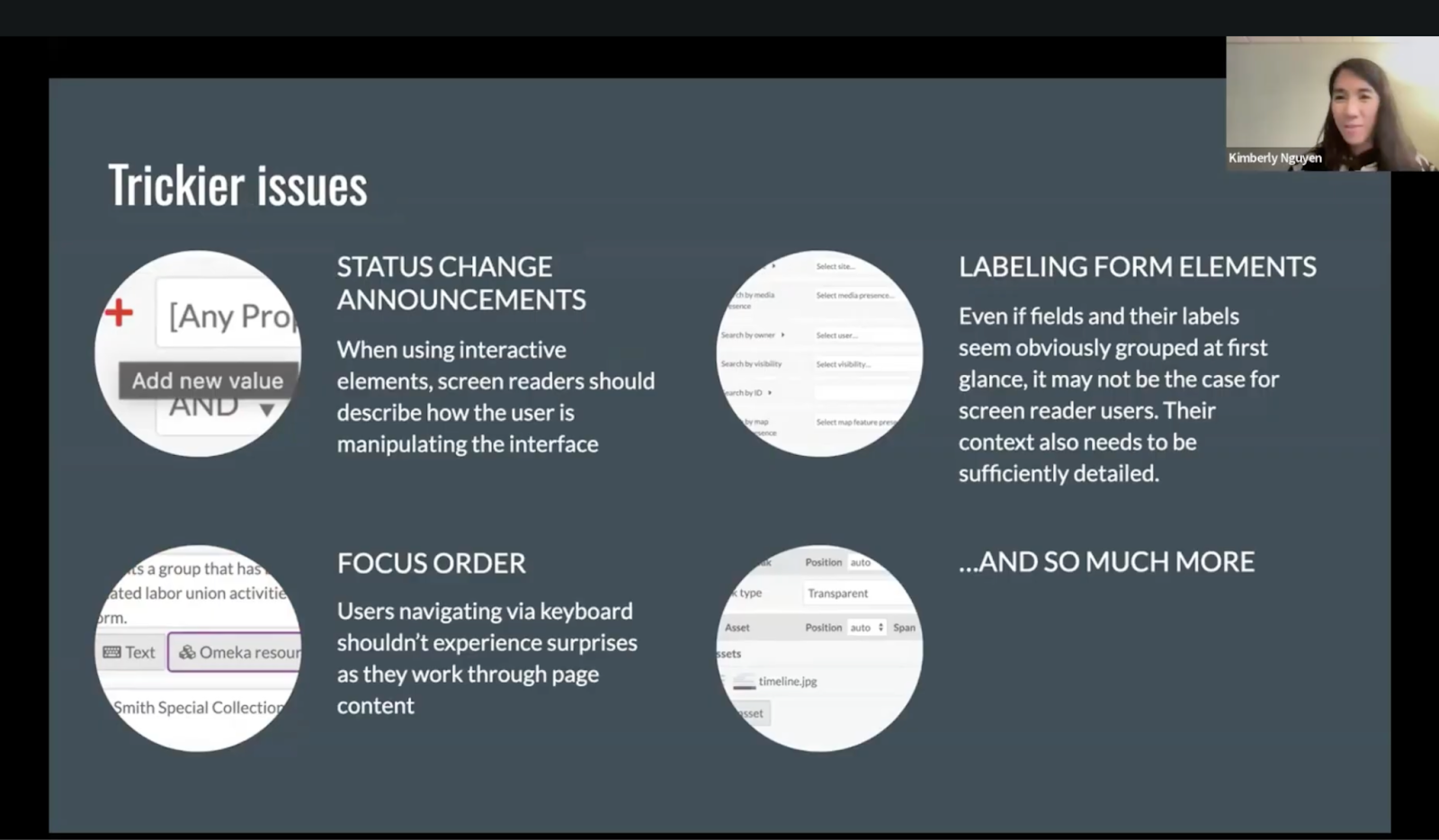
Next month, Nguyen will post additional updates on the work our design team is doing as a follow-up to the community call. The upcoming post will demonstrate advanced authoring techniques within Omeka S’s page builder. The goal is to highlight how site authors can create structured pages with visual interest using features including the grid layout, block settings, and block templates. We hope this will help our community learn easier ways to construct and manage elements like hero images, embedded galleries, and highlighted callouts.
However, this just scratches the surface of the work happening behind the scenes to make Omeka a more accessible platform. Last year, Avianna Miller joined the team, bringing with her an extensive background in accessibility testing. Miller and Nguyen have helped the team develop a sustainable testing approach for all updates and releases, ensuring that accessibility best practices are integrated into testing guidelines through an access-oriented lens. Omeka not only complies with but also strives to exceed the latest WCAG standards, aiming for Level AA compliance in our remediations and eventual conformance with Level AAA. To this end, the Omeka Team is conducting more frequent holistic accessibility audits internally and planning more steady, maintained VPAT releases.
This year, plans are underway to collaborate with Omeka Technical Writer Allana Mayer to update user manuals, providing users with a more comprehensive understanding of Omeka platforms’ built-in accessibility features and how to maintain and expand accessibility during the authoring process. There are also plans for navigation guides that will better consolidate information on Omeka’s standardized accessibility features and provide layout navigation tips for assistive technology users.
Spotlight: The Joseph S. Freeman Archive
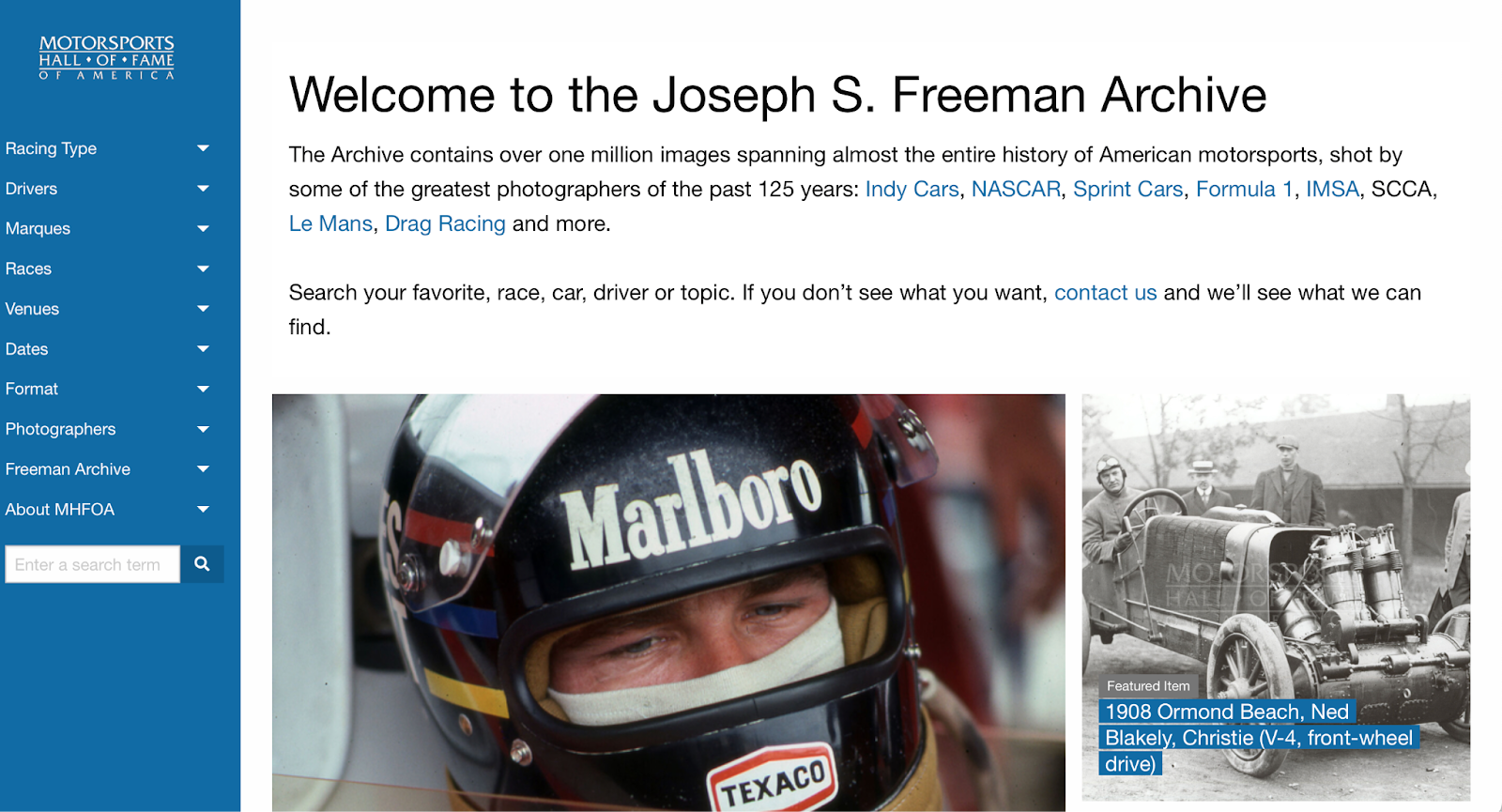
This quarter’s Omeka newsletter Spotlight is the Motorsports Hall of Fame of America’s Joseph S. Freeman Archive. This Omeka .net project houses over a thousand digitized images from the million item collection documenting the history of American motorsports. The Archive includes the work of more than thirty photographers and collectors covering Indy Cars, NASCAR, Formula 1, Sprint Cars, IMSA, SCCA, Le Mans, Drag Racing, and more. Explore the collections and learn more about the project today. Explore the Site
Share your work with us for inclusion in our directories, and for a possible future Spotlight!
Meet the Team

Name: Nelson Amaya
Role: Web Designer and Developer
How long have you been with Omeka?
About 3 years
What work have you done that our community would be familiar with? I built the “Freedom” and “Lively” themes for both Omeka Classic and Omeka S. I also built the “Am I an American or am I not” for the Korematsu team, and “Early Black Students at Yale” for the Yale team.
Do you have a favorite project you’ve worked on or just a favorite part of working with the Omeka team/community?
It’s been an amazing experience building modern themes on Omeka as open-source resources that are being used for the display of library, museum, archives, and scholarly collections and exhibitions.
What’s a fun fact about you?
I’m the lead vocalist of a metal band. I also love tattoos.
Omeka in the World
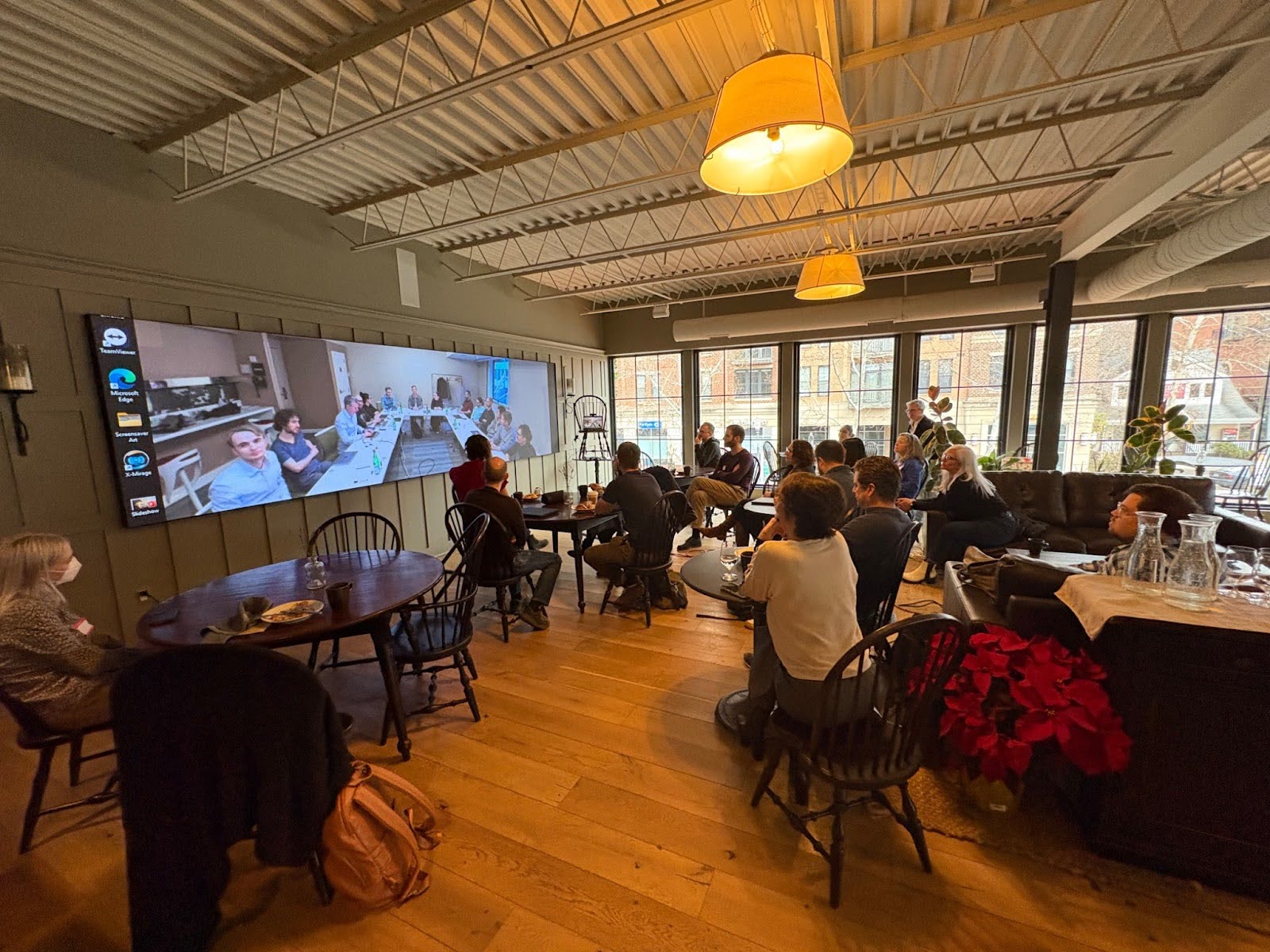
In December, the Omeka Team attended the Digital Scholar All Hands Meeting. This meeting took place in Washington D.C. and Luxembourg, and it allowed us to brainstorm and collaborate with the Zotero, Tropy, and Sourcery teams. This was also the first time some of our team had the chance to meet each other in person. We’re hoping to make this meeting a new tradition and give us the chance to more clearly imagine our users in the wider context of the Digital Scholar community.
Spring Intensive Courses Enrollment!
Our next round of eight-week Omeka Classic and Omeka S courses will begin February 10 and February 11, respectively. Click here to view course options, then click the enroll link for your desired course. You will then be prompted to create an account in our learning management system. Once you have created an account, you will be able to select the course you would like to enroll in. You will then be invoiced, and upon submission of payment your spot will be reserved. After that you will receive an invite to Moodle, our course training website. Courses are limited to 20 participants to assure adequate instructor support, so sign up today!
Upcoming Events
-
Join us for the first Community Call of 2026 on February 12 at 11:00am EST. This call will focus on the theme of archives. Come prepared to share a project you would like to showcase! Register here to get the Zoom information.
-
Our Intensive Courses instructor, Dani Willcutt, is offering a new series of workshops on a variety of topics related to Omeka Classic and S! Keep an eye on the Omeka training site and social media for registration information.
- Effective Exhibit Building in Omeka Classic and Omeka.net, Thursday March 12th 12-2:00 pm EDT
- Effective Site Building in Omeka S - Part One Planning and Design, Thursday March 26th 12-2:00 pm EDT
- Preparing Your Data for CSV Import in Omeka Classic and Omeka.net, Wednesday April 8th 10-11:30 am EDT
- Preparing Your Data for CSV Import in Omeka S, Wednesday April 15th 10-11:30 am EDT